
Growth plates, also medically known as epiphyseal plates are vital regions that allow bone growth during childhood and adolescence. They are located near the ends of long bones such as femur and tibia and enable the bones to grow taller until the adolescence is over. Growth plates consist of hyaline cartilage, which gradually undergoes a process called endochondral ossification, where cartilage is replaced by bone. This process continues until the growth plates close, typically between ages 14-16 in females and 16-18 in males, although some bones, like the clavicle, may grow into the mid-20s. Growth plate health is influenced by factors such as genetics, nutrition, physical activity, and hormonal balance. Injuries to growth plates are common in young individuals and can lead to complications if not properly treated, such as uneven growth or deformity. People often ask questions like “Can growth plates reopen once they’re closed?” or “Can I stimulate them to grow again as an adult?”
This article explains everything you need to know about growth plates: what they are, when they close, and do they reopen once closed.
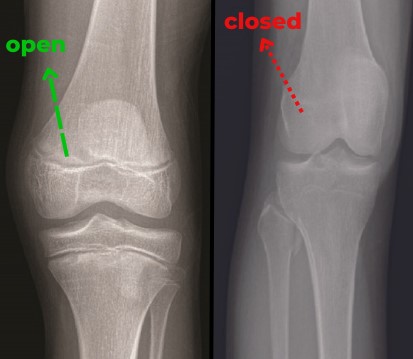
What Are Growth Plates?
Growth plates, medically known as epiphyseal plates, are layers of cartilage located at the ends of long bones. These cartilage zones act like “factories” that produce new bone tissue during a child’s growth years.
As the cartilage cells divide, enlarge, and ossify, bones gradually lengthen. This process continues until puberty is complete and the growth plates harden into solid bone.
Where are they located?
Growth plates are found in:
- Leg bones (femur, tibia, fibula)
- Arm bones (humerus, radius, ulna)
- Other long bones (fingers, toes, collarbone)
Because they are softer than bone, growth plates are more fragile and more prone to injury in children and teenagers.
When Do Growth Plates Close?
Growth plates don’t stay open forever. As puberty progresses, these zones of cartilage gradually transform into solid bone in a process called epiphyseal closure. Once this happens, the potential for natural height increases ends.
Typical Closure Ages
- Girls: Growth plates generally close between 14–16 years.
- Boys: Growth plates usually close between 16–18 years, though in some individuals closure may occur as late as 20–22 years.
This difference is largely due to hormones; estrogen (present in both sexes but higher in females) speeds up bone maturation, causing earlier closure in girls.
Factors That Influence Closure
Several elements determine when growth plates close:
- Genetics: Family patterns strongly influence timing.
- Hormones:
- Estrogen is the main regulator of growth plate closure in both sexes.
- Growth hormone (GH) and IGF-1 drive growth while plates are open.
- Nutrition: Poor nutrition, vitamin deficiencies, or chronic illness can delay closure.
How Do Doctors Check Growth Plates?
Since age alone isn’t enough to know whether growth plates are open, doctors use imaging techniques:
- X-rays – the most common method; open growth plates appear as dark lines.
- MRI scans – provide detailed images in special cases.
- Bone age scans – compare skeletal maturity with chronological age.
A simple consultation with an orthopedic doctor can confirm whether growth plates are open or closed.
Do Growth Plates Reopen?
Most people ask this question: Do growth plates reopen? And the clear medical answer is: No.
Once a growth plate has fused into solid bone, the cartilage is gone and cannot regenerate naturally. The closure is permanent and irreversible. Growth plates do not reopen once they have closed. During childhood and adolescence, growth plates remain active (open), allowing bones to lengthen as the body grows. This process continues until the growth plates close, typically in the late teens or early twenties, depending on factors like gender and genetics. Closure occurs when the cartilage in the growth plates is completely replaced by bone, signaling the end of natural height growth. Once this process is complete, there is no natural way for growth plates to reopen or resume activity. While some people wonder if growth plates can reopen due to hormonal treatments or other interventions, medical science confirms that this is not possible. Any height increase after growth plate closure would require surgical methods, such as limb-lengthening procedures. It is proven that through limb lengthening surgeries, individuals can increase their height even though their growth plates are closed. Other than the surgery, there is no scientific fact that proves height can increase after the growth plates are closed.
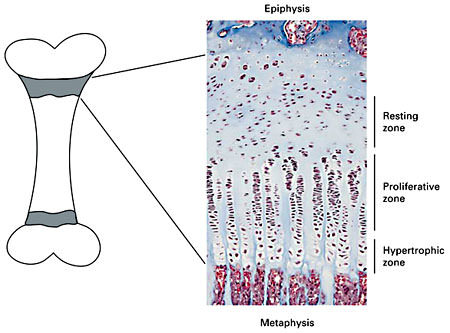
The growth plate is a thin layer of cartilage located at the ends of long bones. It is usually divided into three main sections: the resting zone, the proliferative zone, and the hypertrophic zone.
Is It Possible to Get Taller After the Growth Plates Are Closed?
Once the growth plates have closed, it is no longer possible to grow taller through natural bone elongation. The cartilage responsible for generating new bone tissue is permanently replaced by hardened bone, meaning height increase from natural growth stops. While posture improvement, strengthening the spine, or correcting musculoskeletal imbalances can make a person appear slightly taller, these do not change actual bone length. In adults, the only medically proven way to increase height after growth plate closure is through surgical limb lengthening, where bones are gradually extended using specialized devices. Research in regenerative medicine and stem cell therapy is ongoing, but at present, no treatment can biologically “reopen” closed growth plates.
Limb Lengthening After Growth Plates Are Closed
For adults who wish to increase their height after growth plates have fused, limb lengthening surgery is currently the only scientifically proven method. The procedure involves cutting a bone (usually the femur or tibia) and gradually separating the two ends using an external fixator or an internal lengthening nail. As the bone is slowly pulled apart, the body naturally fills the gap with new bone tissue; a process called distraction osteogenesis. Over time, muscles, nerves, and blood vessels also adapt to the new length. Depending on the technique used, patients can gain 6-10 cm (2–3 inches) per bone segment. While the surgery can achieve permanent height increase, it is a complex process that requires months of rehabilitation, carries risks such as infection or delayed bone healing, and should only be performed by specialized orthopedic surgeons.
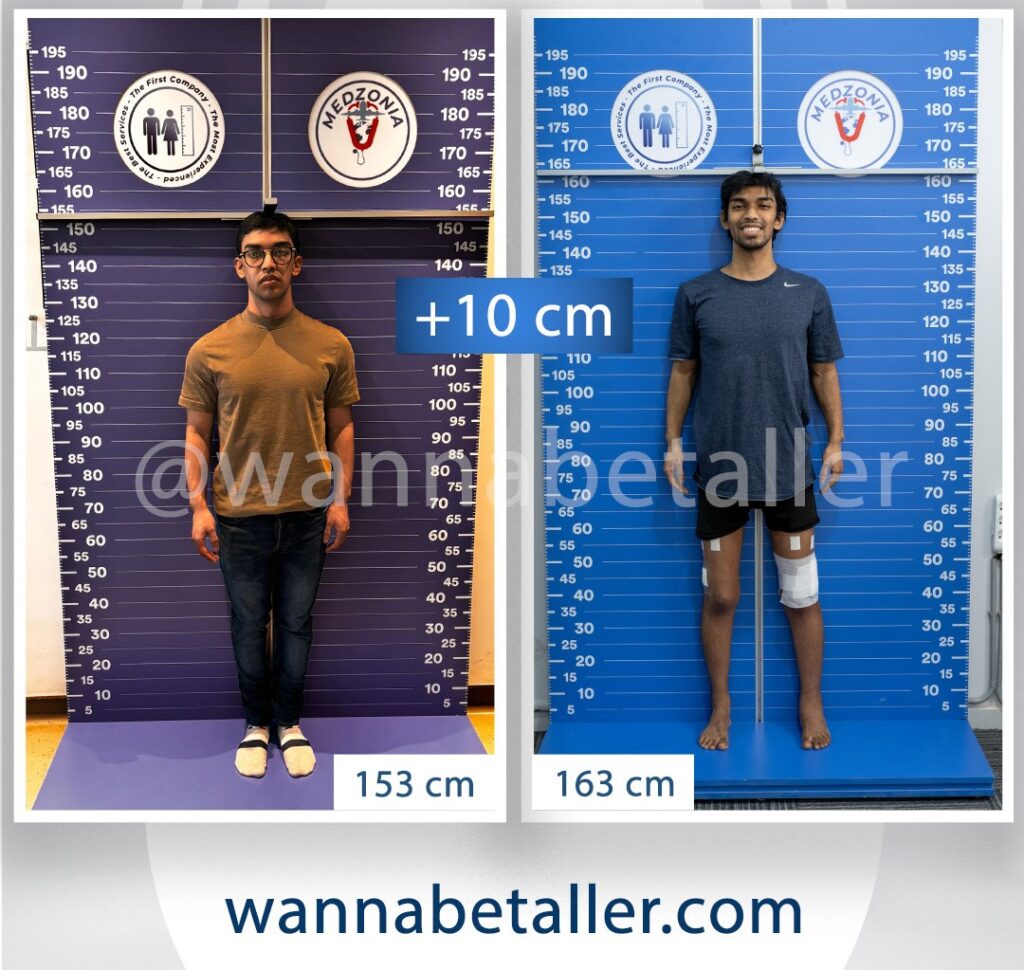
Below is an example of our patient who achieved a stature 10 cm taller through limb lengthening surgery after his growth plates are closed.
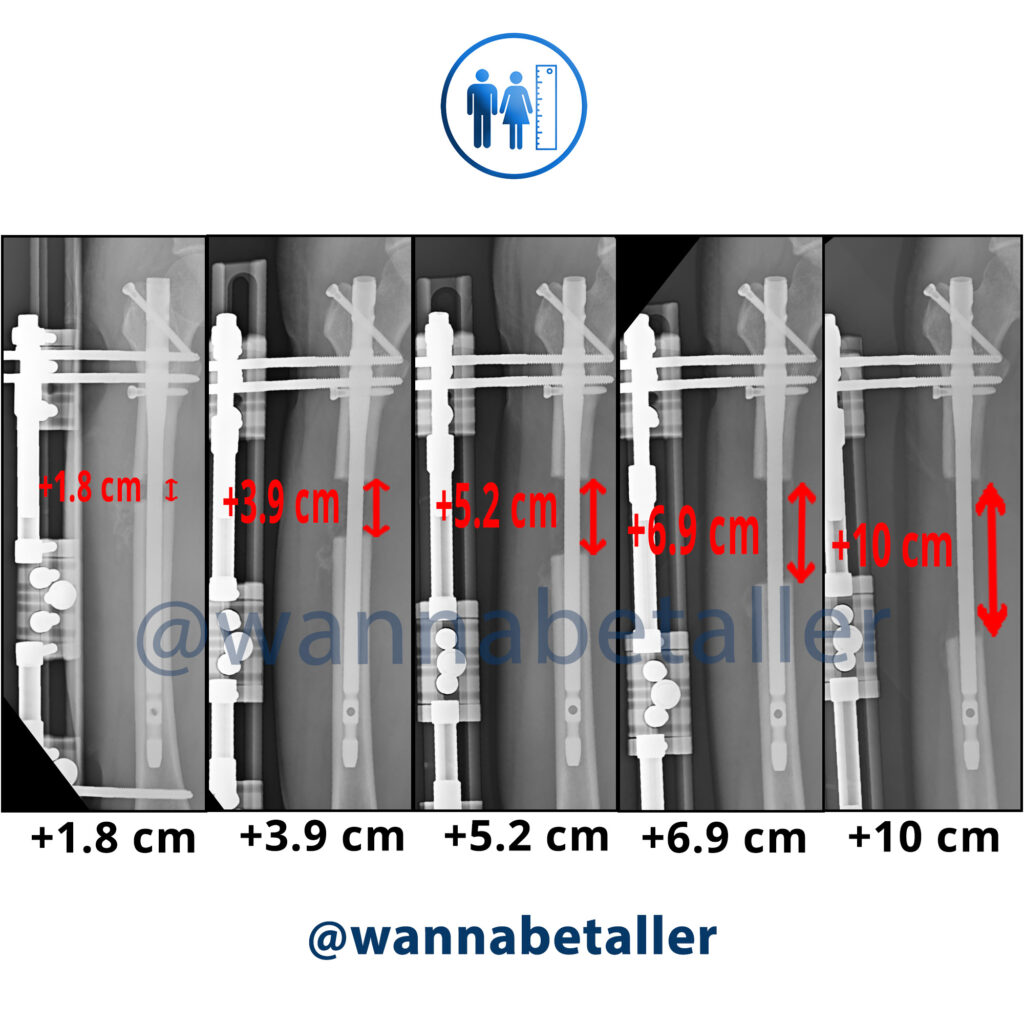
Below are the X-rays of our patient during the lengthening phase.
Are There Any Pills To Increase Height After Growth Plates Are Closed?
There are no pills or hormones that can reopen growth plates once they have closed. Growth plates, also known as epiphyseal plates, close permanently after adolescence when they are replaced by solid bone, marking the end of natural height growth. During the growth phase, hormones like growth hormone, thyroid hormone, and sex hormones (e.g., estrogen and testosterone) play a vital role in stimulating the activity of growth plates. However, after closure, these hormones can no longer affect bone length.
While some companies may market supplements or pills claiming to increase height, such products lack scientific evidence and are often misleading. Hormonal treatments, such as growth hormone therapy, are only effective in children or adolescents with specific medical conditions that impair growth and must be administered under strict medical supervision. For adults looking to increase height, surgical procedures like limb-lengthening surgery are the only viable option.
For adults seeking to increase their height after growth plates have closed, limb-lengthening surgery is the only scientifically proven option. This surgical procedure involves carefully breaking the bone and gradually lengthening it using a specialized device, such as an external fixator or internal rods.
Over time, new bone tissue grows in the gap, allowing the limb to become longer. Limb-lengthening surgery can add several centimeters to a person’s height, but it also requires significant commitment, as the recovery period is lengthy, often spanning several months to a year, and involves physical therapy to rebuild strength and mobility in the legs. While it is not a decision to be taken lightly, limb-lengthening surgery offers a life-changing option for those who are determined to achieve greater height and are willing to undergo the rigorous process.
For more information about this procedure you can take a look at our article about limb lengthening surgery. To create the best treatment plan for you, feel free to contact us. Our professional team is here to answer your questions and support you.
For detailed information and appointment:
Phone & WhatsApp: +90 531 988 30 90
Email: support@wannabetaller.com
Instagram: @leg_lengthening_surgery
2 Comment